
What players say
Angle Aim Puzzle delivers a straightforward challenge: click or tap white balls circling a center point before they overwhelm you. The minimalist design keeps focus on precision and reflexes, while the rising speed and multiplication of balls create a natural difficulty curve. It suits players who enjoy quick, repeatable sessions and gradual skill improvement. The lack of complex rules makes it accessible, though the simple presentation may not appeal to those seeking deeper progression or varied game modes.
About this game
Core Aiming Mechanic
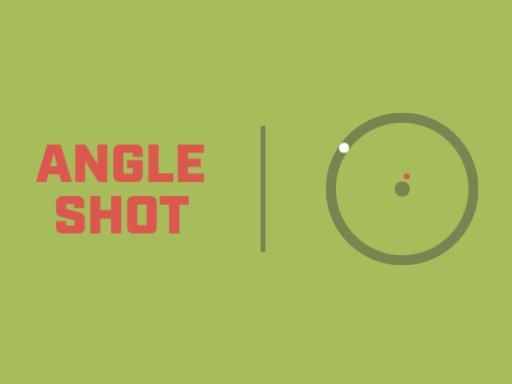
Angle Aim Puzzle places a cluster of white balls around a central circle. Your task is to aim with the mouse or touch screen and click or tap to defeat each ball. The challenge comes from the balls' circular movement: you must time your shot to hit them as they rotate. Missed shots allow new balls to appear, gradually increasing the number of targets on screen.
Escalating Difficulty
The game starts with a manageable number of slow-moving balls. As you clear them, the remaining balls move faster and multiply more aggressively. This creates a difficulty curve that tests both your reflexes and your ability to prioritize targets. The game ends when too many balls accumulate or when a time limit expires, though the exact fail condition depends on the specific mode or version.
Minimalist Presentation
Visuals are deliberately stripped back: a central circle, white balls, and a clean background. This minimalist approach keeps your focus on the timing and aim mechanics. There are no complex rules or elaborate animations to distract you. The design supports short sessions, whether you have a few minutes or longer to play.
Scoring and Replay
A scoring system tracks your progress and encourages repeated attempts. Each defeated ball likely adds to your score, and missing may reset or reduce it. The game's hypercasual nature means runs are short, and the simple controls make it easy to jump back in for another try. Improving your aim and target prioritization can lead to higher scores.
✅ Compatibility & Testing
FAQ
Player comments
Sign in to comment
You must be logged in before posting a review or rating.
No comments yet. Be the first to comment!



Editorial Notes