
What players say
Hand-Drawn Sky Runner keeps its scope tight: one input, one scrolling direction, and a difficulty curve built purely on acceleration. The hand-drawn cityscape stays uncluttered, which helps players read gaps at speed. Because there are no levels or unlocks, the appeal rests on self-improvement and short, repeatable attempts. Players who enjoy rhythm-based precision and chasing personal bests will get the most from it, while those wanting varied obstacles or progression systems may find it limited.
About this game
A Sketchbook Cityscape
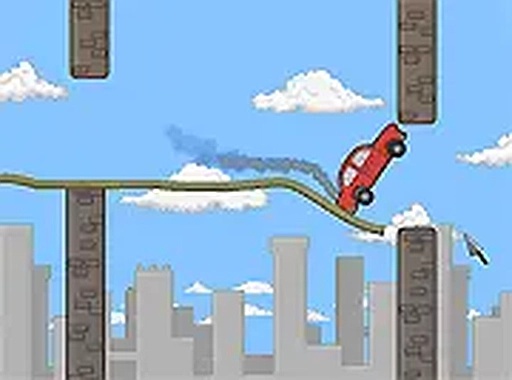
Hand-Drawn Sky Runner dresses its city in a sketch-like style. Buildings and obstacles read as if they were lifted straight from a doodle pad, which keeps the screen visually light. That restraint matters during fast runs: with little visual noise, the open gaps between structures stay easy to read, so the challenge comes from timing rather than from squinting at a busy background.
One Button, Two States
The character travels from left to right while the world scrolls in from the right edge. A single input drives everything. Tapping, clicking, or pressing the spacebar makes the character ascend; letting go produces a gentle descent. There is no second button, no dash, and no power-up to manage. Success depends on threading the character through gaps in oncoming structures, and any collision resets the run immediately.
Speed Is the Difficulty
Rather than introducing new obstacle types, the game raises the stakes by accelerating. As a run continues, the scroll speed gradually increases, so gaps arrive more frequently and the window to react narrows. Players who can hold a steady rhythm under that mounting pressure are the ones who last. The controls respond without noticeable lag, which means a failed run reflects a timing error rather than a technical one.
Short Runs, Long Sessions
An individual attempt is brief, lasting anywhere from a few seconds to a couple of minutes for skilled players. There is no save system and no unlock track; progress is measured only by the distance or score reached in a single run. That structure suits quick breaks as well as longer sessions spent chasing a personal best, and the simple loop of improving technique keeps players returning for one more attempt.
✅ Compatibility & Testing
FAQ
Player comments
Sign in to comment
You must be logged in before posting a review or rating.
No comments yet. Be the first to comment!





Editorial Notes