

What players say
Pogo Drop Puzzle Quest builds its challenge around a single constraint: the character bounces automatically, so movement is about when to shift left or right, not whether to jump. That focus keeps the game easy to understand but still demanding, especially once platforms start moving or disappearing. The gradual difficulty curve and replayable stages give it more staying power than a typical one-mechanic arcade game. Its bright, uncluttered visuals make it a reasonable pick for families and short sessions, though players seeking deep progression systems may find the scope modest.
About this game
Bouncing as the Core Mechanic
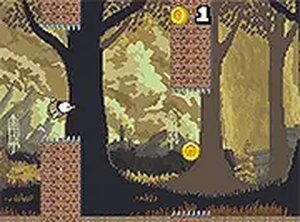
In Pogo Drop Puzzle Quest, the playable character never stops bouncing. That single rule shapes everything: you do not jump manually, and you cannot pause mid-air. Instead, you tap or press directional inputs to shift left or right, then trust the bounce to carry you onto the next platform. Landing safely depends on timing your movement before the character touches down. Miss the platform, and the gap ends the run. The loop stays simple, but each input carries weight because the bounce rhythm never slows.
Platform Patterns and Moving Hazards
Stages are defined by their platform layouts. Some platforms shift position, while others vanish after a short window. Because the character bounces on a fixed rhythm, these hazards force you to read the pattern first, then commit to a move. The variety of configurations keeps stages from feeling interchangeable, and later layouts combine tighter spacing with faster obstacle cycles. Careful observation matters more than fast reflexes alone.
Difficulty Ramp and Replay Value
Early stages function as tutorials for movement and timing. As you progress, obstacle patterns grow more complex and platform spacing narrows, creating a steady difficulty curve rather than a sudden spike. Completed stages can be replayed to improve performance, which gives the game a light score-chasing layer without forcing it on players who simply want to finish each level.
Collectibles and Risk Decisions
Stars and similar collectibles appear on platforms or in the air throughout each stage. Grabbing them raises your score, but they are optional. Since the bounce rhythm is constant, chasing a collectible often means moving into a riskier position. Prioritizing a safe landing over a single star is frequently the smarter play, and that trade-off adds a strategic layer for score-focused players.
Visual Clarity and Family Appeal
Bright, cheerful graphics and clean backgrounds keep attention on the bouncing character and upcoming obstacles. The uncluttered presentation helps players assess each situation quickly, which matters when platforms are moving or disappearing. The lighthearted tone and straightforward controls make the game approachable for younger players and casual sessions alike.
Compatibility
FAQ
Player comments
Sign in to comment
You must be logged in before posting a review or rating.
No comments yet. Be the first to comment!



Editorial Notes