
What players say
Letter Link Challenge is a word puzzle that asks players to match identical letters or form words to clear a grid. Its strength lies in the way each removal changes the board, turning a simple matching rule into a test of planning and pattern recognition. The bright, uncluttered design suits younger players, but later stages with larger grids and fewer obvious matches give adults a genuine mental workout. The main limitation is that the input does not specify exact level counts or special tile details, so players should expect a gradual difficulty curve rather than a fixed feature list.
About this game
Matching Letters and Forming Words
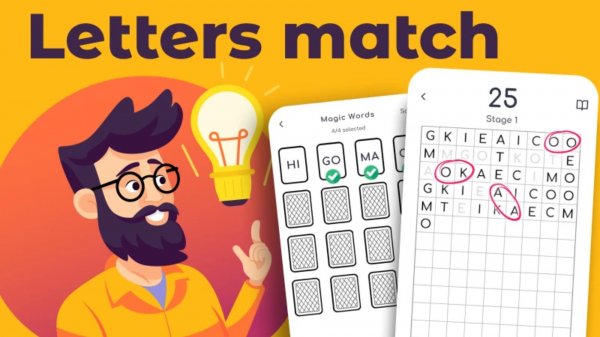
Letter Link Challenge places a grid of letters in front of you. Your job is to select one letter and then find either an identical letter or a specific combination that creates a word. When the match is correct, those letters disappear. The rule set is short, but the board does not stay simple for long. Each cleared pair or word changes what remains, and that shift is where the puzzle begins to demand more than quick eyes.
Reading the Board Before You Move
Because matches remove letters, every choice alters future options. Clearing a small pair might open a path to a larger word, while removing a single letter could block a combination you needed later. The game rewards players who scan the whole grid, identify clusters, and decide the order of moves rather than grabbing the first match they see. That tactical layer separates Letter Link Challenge from puzzles that rely on reflexes alone.
Visual Clarity and Feedback
The interface keeps letters large and legible against a colorful background. Buttons and icons are sized for touch or mouse input, so the focus stays on the grid. Animations confirm matches without pulling attention away from the board. The overall look is cheerful and uncluttered, which makes the puzzle approachable for younger players while still feeling appropriate for adults who want a mental workout.
How Difficulty Grows
Early puzzles use smaller grids or simpler letter sets, letting new players learn the matching rule without pressure. Later stages expand the board, add more letters, and reduce the number of obvious matches. That curve keeps beginners from getting stuck while giving experienced players boards that require real planning. The input also notes that special letter tiles or obstacles may appear, which would ask players to adjust their usual matching strategy.
Compatibility
FAQ
Player comments
Sign in to comment
You must be logged in before posting a review or rating.
No comments yet. Be the first to comment!

Editorial Notes