
What players say
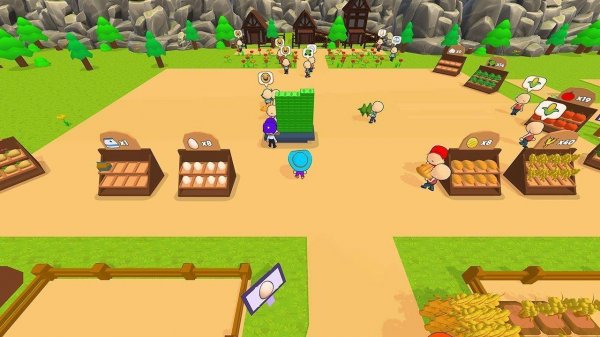
Green Pastures: Agricultural Management focuses on the slow work of turning a small plot into a productive farm. Its strengths are the crop-timing decisions and the budget trade-offs between immediate upgrades and land purchases. Players who enjoy planning layouts and balancing short-term income against long-term growth will find a coherent management loop. The game does not appear to offer fast action or narrative, so it best suits those who prefer deliberate, incremental progress.
About this game
From Wasteland to Workable Soil
You begin with a small, unworked plot. Rocks and weeds block planting, so clearing them is the first task. Each cleared section becomes a usable bed, and where you place those beds matters: a sensible arrangement cuts the walking time between chores. This opening phase sets the tone for the rest of the game, where preparation directly affects how much you can grow and how easily you manage it.
Crop Timing and Income Rhythm
Seeds do not all behave the same way. Some vegetables finish in a few days and return money quickly; others take longer but sell for more. The useful skill is mixing both types so that early harvests fund the wait for slower, more profitable crops. Planting only fast crops limits growth, while planting only slow ones leaves you short on cash. Experimenting with combinations is part of the design, and no single schedule suits every playstyle.
Spending Harvests Wisely
Every harvest produces currency, and the game offers two broad directions for it. Immediate upgrades, such as better watering systems, make daily work faster. Long-term investments, like buying adjacent fields, increase what you can produce. Neither choice is strictly correct; the economic system rewards players who budget carefully and avoid overspending on one path while neglecting the other. There is room for different strategies as long as spending stays deliberate.
Tools, Buildings, and Layout
As the farm grows, basic tools stop being enough. Advanced equipment reduces manual labor and raises output, while larger storage buildings let you hold more before selling. These upgrades change the rhythm of daily tasks, making it possible to run a bigger operation with less effort. Rearranging fields, paths, and buildings also saves time, turning spatial planning into a strategic layer that sits alongside crop selection. The result is a management game where efficiency comes from both what you plant and how you organize the land around it.
Compatibility
FAQ
Player comments
Sign in to comment
You must be logged in before posting a review or rating.
No comments yet. Be the first to comment!









Editorial Notes