
What players say
Grid Deduction Challenge excels at delivering a pure logic experience without unnecessary frills. The minimal interface lets you focus on the puzzles, which are generated randomly for infinite replayability. Difficulty scaling is well-tuned, offering a gentle learning curve for newcomers and demanding grids for experts. The lack of timers makes it a relaxing yet engaging brain workout. It is an ideal choice for anyone who enjoys methodical problem-solving.
About this game
Core Puzzle Mechanics
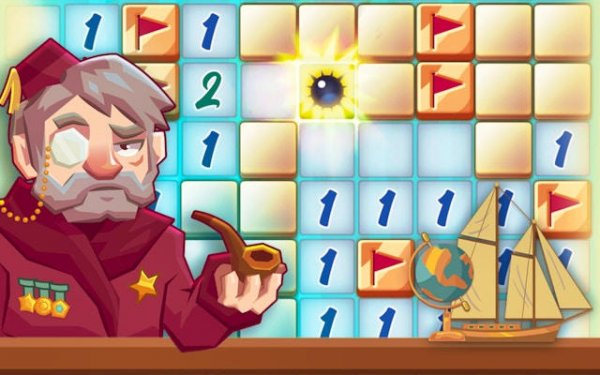
Grid Deduction Challenge centers on a straightforward premise: a rectangular board hides a set number of markers. Players click tiles to reveal numbers that indicate how many markers are adjacent to that tile, including diagonally. Using these numeric clues, players deduce where markers lie and flag those tiles to avoid accidental clicks. The goal is to uncover all safe tiles without triggering a marker. This system relies entirely on logical reasoning, as each clue narrows down possibilities.
Difficulty Scaling
The game offers multiple difficulty tiers, from smaller grids with fewer markers to larger, denser boards. Beginners can start on easy settings, where clues are more abundant and patterns simpler. Advanced players can tackle expert levels, which require careful analysis and quick pattern recognition. This scaling ensures that newcomers can learn the fundamentals while veterans find a satisfying challenge. Each difficulty adjusts the grid size and marker count, but the core logic remains consistent.
Visual Design and Usability
The interface is intentionally minimal, with a clean grid and clear numeric displays. Tiles are color-coded for easy identification: safe tiles show numbers, flagged tiles are marked, and uncovered markers are visible upon game over. This design reduces visual clutter, allowing players to focus on deduction. Controls are responsive, with simple clicks for revealing and right-clicks or toggles for flagging. The layout works well on both desktop and mobile screens, making it accessible for quick sessions.
Strategic Approaches
Effective play often begins by clicking a corner tile, which tends to reveal a larger area due to fewer adjacent markers. From there, players use the numbers to identify safe zones and likely marker positions. Common patterns, such as a 1 in a corner or a 2 on an edge, help speed up decisions. Over time, players develop heuristics for complex clusters, like when a 3 indicates a specific arrangement. The game rewards patience and methodical thinking over speed.
Replayability and Variety
Each new game generates a unique board layout, ensuring no two puzzles are identical. This randomness, combined with adjustable difficulty, provides near-infinite replay value. Players can replay the same difficulty to improve their solving time or try harder settings for a new challenge. The lack of timers or pressure means sessions can be as short or long as desired, fitting into any schedule. This variety keeps the experience fresh without relying on additional content updates.






Player comments
Sign in to comment
You must be logged in before posting a review or rating.
No account? Create one
No comments yet. Be the first to comment!