
What players say
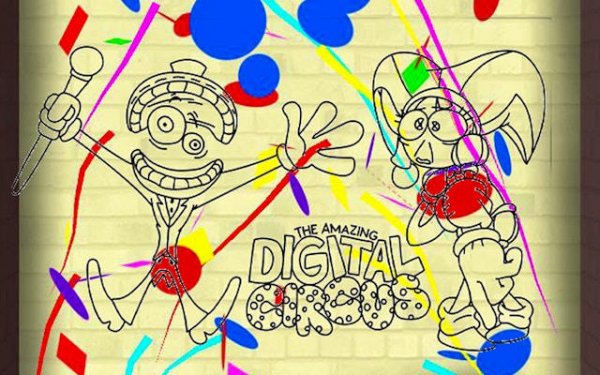
Pomni Puzzle Escape Adventure targets players who enjoy physics-based logic puzzles without timers or violence. Its strength lies in the gradual difficulty curve and the consistent circus setting, which gives each room a distinct look while keeping mechanics familiar. The lack of time pressure makes it accessible for younger players and casual sessions. The main limitation is that the available information does not specify the total number of rooms or any story elements, so players seeking narrative depth should look elsewhere.
About this game
Solving Rooms with Ropes and Blocks
Each room in Pomni Puzzle Escape Adventure presents a self-contained physics problem. Pomni stands somewhere in the space, and the exit is blocked by objects that respond to your actions. Ropes can be released, pulleys can be triggered, and blocks can be shifted. The solution is rarely a single action; you often need to plan a short sequence, because releasing one rope may swing a platform into position or drop a block that opens the next step. [IMG_1]
Why Patience Beats Speed
There is no timer and no penalty for failure. The game actively rewards observation over reflexes. Before touching anything, it helps to trace how each interactive element connects to the others. If a plan fails, the room resets and you can try a different order of operations. This trial-and-error loop is the main way the game teaches its own logic, so mistakes function as information rather than setbacks.
Circus Setting and Gradual Difficulty
The circus theme is more than decoration. Room layouts use the visual language of a big top: raised platforms, hanging ropes, and props that fit the setting. Early rooms introduce one mechanic at a time, such as pulling a single rope to move a block. Later rooms combine mechanics, requiring you to manage multiple objects in sequence. The difficulty curve stays gentle enough for younger players while still offering enough steps to satisfy adults who enjoy logic puzzles. [IMG_2]
Who This Puzzle Game Suits
Because there is no violence, no time pressure, and no complex controls, the game fits short breaks as well as longer sessions. Fans of physics-based brain teasers will find the rope-and-block interactions familiar but applied in a consistent circus framework. The single-character focus keeps the experience simple: you are not managing a party or a story, just one puzzle at a time.
Compatibility
FAQ
Player comments
Sign in to comment
You must be logged in before posting a review or rating.
No comments yet. Be the first to comment!



Editorial Notes