
What players say
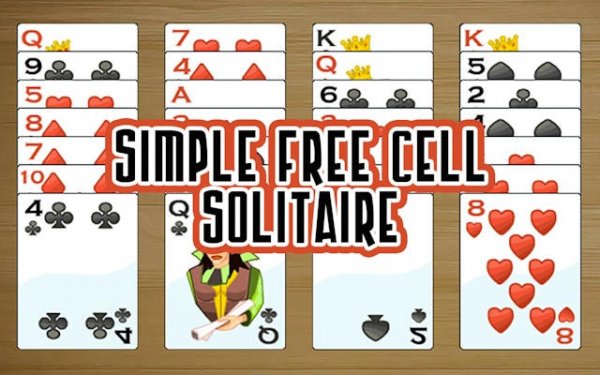
Free Cell Solitaire Puzzle strips solitaire down to pure sequencing. Because every card is visible from the first move, success depends on reading the tableau and managing four limited free cells. The browser format removes setup friction, making it easy to play a single deal or several. Players who prefer strategic card puzzles over luck-driven draws will find it a good fit. The main limitation is that stuck deals happen, and not every layout can be solved.
About this game
How the Tableau Works
Free Cell Solitaire Puzzle deals all 52 cards face-up across eight columns, so no hidden information exists from the start. That openness separates it from many solitaire variants: you can assess the full board immediately rather than uncovering cards as you go. The puzzle lies in sequencing, not luck. Each column accepts cards in descending order with alternating colors, so a red six can sit on a black seven. Building these runs is how you unlock the board and create paths to the foundations.
The Role of the Four Free Cells
Four free cells sit above the tableau, each capable of holding one card at a time. They are your only buffer against a blocked layout, and using them carelessly can strand cards you need later. A free cell is best treated as a short-term parking spot, not long-term storage. Moving a card there to expose a column card is often worthwhile; leaving it there for many turns usually signals a plan that needs rethinking.
Building the Foundations
The win condition is straightforward: move every card to four foundation piles, one per suit, in ascending order from Ace to King. Foundations accept cards only in sequence, so an Ace must arrive before its Two. Because all cards are visible, you can plan several moves ahead and decide which suit to prioritize. Rushing a foundation without checking column consequences is a common way to stall a promising layout.
Planning and Patience
The game rewards pattern recognition and forward thinking more than speed. Before moving a card, consider what the move exposes and what it blocks. Uncovering low cards early tends to open more legal moves, while hoarding free cells limits flexibility. Not every deal is solvable, so treating each attempt as a puzzle to read rather than a race to finish keeps the experience engaging.
Compatibility
FAQ
Player comments
Sign in to comment
You must be logged in before posting a review or rating.
No comments yet. Be the first to comment!









Editorial Notes