
What players say
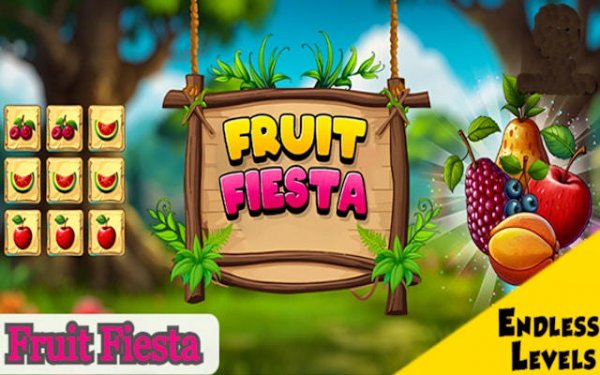
Fruit Fiesta Tile Puzzle focuses on logical tile arrangement rather than time pressure or complex rules. The swap-and-place mechanic is easy to learn, and the gradual increase in tile count and pattern difficulty keeps later boards demanding. HTML5 support means it runs on Android, desktop browsers, and other compatible platforms with touch or mouse input. Players who enjoy pattern recognition and planning several moves ahead will find the progression satisfying, though those seeking fast-paced action may prefer a different style of puzzle game.
About this game
Board Mechanics and Player Goals
Every stage in Fruit Fiesta Tile Puzzle presents a board filled with fruit tiles that must be repositioned into their correct spots. You select a tile by tapping or clicking, then move it to an empty space or swap it with another tile. The game confirms correct placements with visual or audio feedback, so you always know when a move fits the solution. The challenge grows as boards introduce more tiles and less obvious patterns, pushing you to think several moves ahead rather than reacting one tile at a time.
Progression and Difficulty Curve
Early puzzles keep the board small and the required moves straightforward, which makes the basic swap-and-place mechanic easy to learn. As you advance, the number of tiles increases and the correct arrangement becomes harder to read at a glance. That shift turns each new level into a test of pattern recognition and logical sequencing. Because the game does not rely on time pressure, you can study the board and plan without rushing. The steady increase in complexity gives the experience a clear sense of forward momentum.
Controls and Platform Availability
Fruit Fiesta Tile Puzzle runs on HTML5, so it works in desktop browsers, on Android devices, and on other platforms that support the format. The game supports both touch input and mouse controls, letting you play with whichever method feels natural. There is no need to install separate software on each device. That flexibility makes it easy to pick up for a short session or work through several puzzles in one sitting.
Approach and Strategy
Scanning the whole board before making a move is more effective than fixing one tile at a time. Look for tiles that already sit near their correct positions, then work outward from those anchors. Completing smaller sections first can reveal how the remaining tiles should fit together. If a puzzle stalls, stepping away and returning later often makes the pattern clearer. Each move changes the board, so thinking two or three steps ahead reduces wasted swaps.
Compatibility
FAQ
Player comments
Sign in to comment
You must be logged in before posting a review or rating.
No comments yet. Be the first to comment!





Editorial Notes